Table of Content
[Video] SUSTAERO CEO Keith Gillard Delivers Keynote at Unicorn Summit on Jet Fuel Supply Crisis and Canadian SAF Infrastructure Solution
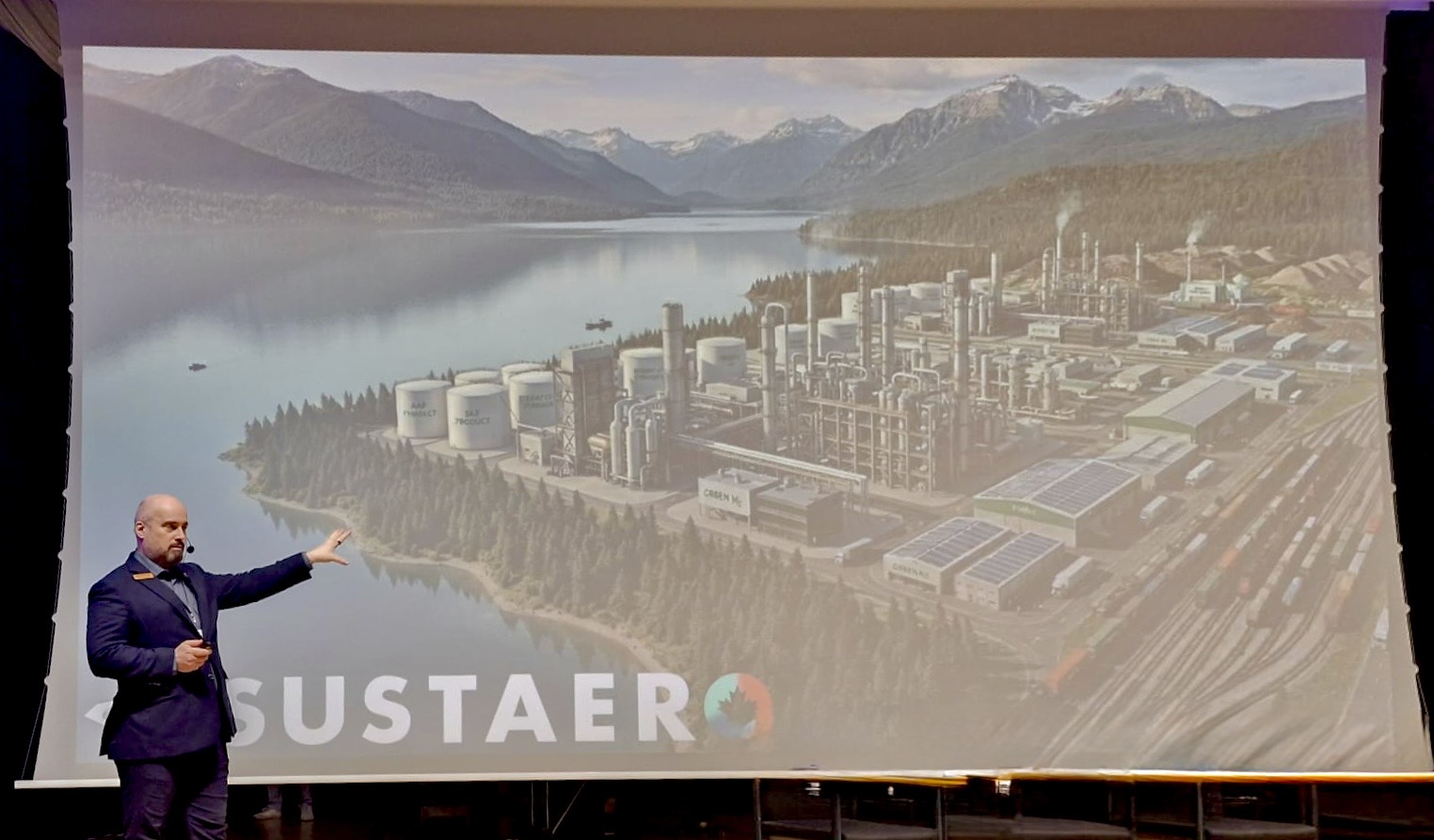
Table of Content

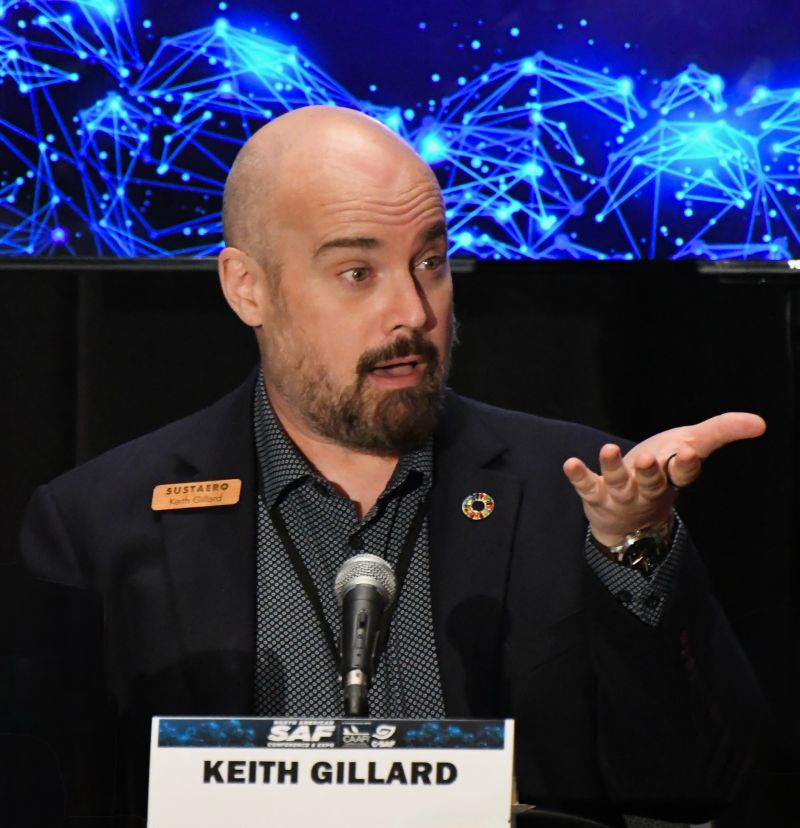
Speaking to an audience of founders, global investors, and tech leaders at the annual Unicorn Summit, SUSTAERO Co-Founder and CEO Keith Gillard directly addressed the reality of modern global travel, framing it around a central question for the room.
"How many of you flew to be here today?" Gillard asked. "And how many of you were surprised at how much it cost?"
Steering the conversation away from typical tech-summit topics like artificial intelligence clones or radical longevity, Gillard brought the audience back to the immediate pressure point impacting the global economy. "I'm going to take you right back to the present," he said. "We are in a jet fuel supply crisis. I'm going to tell you why it's here, why it's going to stay, but I'm not a doom and gloomer. I'm going to talk to you about what the solution is for this sustainably, securely, and abundantly."
The Strait of Hormuz and Global Vulnerability
Gillard illustrated how the physical reality of the global fuel supply creates severe, ongoing economic leverage points. Because jet fuel is simply kerosene derived from fossil fuels, global aviation remains vulnerable to single geographic transit chokepoints, most notably the Strait of Hormuz, which handles $600 billion per year of crude oil and 20% of all mobile petroleum.
"Every day that this is blocked, the whole world is held hostage," Gillard warned, noting that the resulting conflict has caused jet fuel prices to double in Europe while triggering massive wholesale spikes across North America. Showing actual photographs of damaged oil carriers and analyzing the rapid proliferation of cheap, unmanned drone speedboats and missile silos, Gillard emphasized that the underlying risk is permanent. "This is a situation, even after this conflict has ended, that will always be there. They know that this can work. This has been an effective not only physical warfare but economic warfare."
Under current geopolitical scenarios, Gillard explained that fuel prices will not return to historical baselines. The solution requires a fundamental shift in how the molecule itself is created.
Rebuilding on Canada's Systems Advantage
The path forward, Gillard argued, lies in Sustainable Aviation Fuel (SAF). Because SAF relies on the exact same kerosene molecule, it functions as a true drop-in fuel that requires zero modifications to existing aircraft, wings, or airport distribution networks.
While the global market relies heavily on HEFA (hydroprocessed esters and fatty acids) pathways utilizing used cooking oil, animal fats, or canola oil, Gillard highlighted that these feedstocks hit immediate agricultural scaling limits. "Can we really eat a 100 times as many French fries? Can we really slaughter 100 times as many cattle? No."
Instead, SUSTAERO is capitalizing on a massive, regional asset alignment to build out next-generation Fischer-Tropsch Synthetic Paraffinic Kerosene (FT-SPK). Canada holds a distinct structural advantage to lead this 50% globally growing market, holding top global rankings for commercial forestry, renewable electricity, and commercially available fresh water.
Crucially, the country is home to 900 shuttered industrial mills, including 120 pulp and paper facilities. SUSTAERO's core commercial strategy involves upcycling these exact idled sites, which already possess the heavy electrical infrastructure, water permits, and indoor rail bays needed for production.
"We take those former pulp and paper mills," Gillard explained. "We install our technology. We take the exact same inputs used to be used to make pulp and paper but we make SAF on those sites."
Uninterruptible Supply and Regional Sovereignty
Presenting a rendering of SUSTAERO's first commercial facility, which is designed to produce hundreds of millions of litres of SAF per year, Gillard detailed a hyper-localized logistics framework designed to completely eliminate international risk.
"150 kilometres is the radius of the total supply chain to run these," Gillard stated. "Not running through any Strait of Hormuz, not crossing any borders. 150 kilometres to run this 24/7, 365 continuous uninterruptible supply."
By utilizing a bankable, TRL-9 technology framework that combines proven systems from Europe, North America, and South Africa, the process achieves a 97% carbon conversion rate and an overall 90% reduction in carbon dioxide emissions. Beyond the balance sheet, the model directly addresses regional economic needs, activating political will to return high-tech industry and employment to rural and Indigenous communities heavily impacted by the decline of the paper industry.
Gillard concluded his address by adjusting the company's core operational framework into a memorable, direct summary of what SUSTAERO's fuel represents for the future of the aviation market:
"So SAF is sustainable—not just SAF sustainable aviation fuel—sustainable AF. It's safe AF. It's scalable AF. It's sovereign AF and it's secure AF."
Share on






Share on

Recent Blogs




Connect with Sustaero
For investor inquiries, SAF supply discussions, partnerships, or stakeholder engagement, send a note and we’ll respond within one business day.

Sign up for the Frequent Flyer Newsletter
Company
Terms & Conditions