Table of Content
Reinforcing Canada’s Strengths: SUSTAERO CEO Explains Feedstock-Driven Thesis to Canada Clean Fuels and Climate Markets Summit

Table of Content

Toronto, ON, Canada, 2026 October 22
While corporate strategies, refining asset optimization, and regional compliance standards all shape investment decisions, Gillard emphasized that every viable pathway begins and ends with feedstock availability.
"That's where everything starts," Gillard said. "There really are only a few feedstocks in the world that have the potential to completely replace fossil fuels for jet aviation."
The Feedstock Landscape: Abundance vs. Constraints
During his presentation, Gillard outlined a global mapping of feedstock availability against lifecycle carbon intensity (CI) reduction across four primary production pathways:
HEFA (Hydroprocessed Esters and Fatty Acids): While HEFA is the current commercial leader, it faces a hard ceiling. Global supply of used cooking oil (UCO) and tallow stands at roughly 13 million tonnes per year each. While canola and cover crops offer room to expand, lipids alone cannot meet long-term global jet fuel demand.
Alcohol-to-Jet (ATJ): Scalability is even more restricted than that of HEFA, and current pathways deliver relatively low average carbon reduction benefits.
Power-to-Liquid (PtL / e-Fuels): Offers theoretically infinite carbon inputs from atmospheric CO2, though current volumes remain constrained by available power supply.
Fischer-Tropsch Synthetic Paraffinic Kerosene (FT-SPK): Biomass gasification via FT synthesis offers the strongest combination of feedstock scale and CI reduction. Globally, there are nearly 4 billion tonnes of available wood waste annually (after accounting for unusable portions), with 9 percent of global forestry located in Canada.
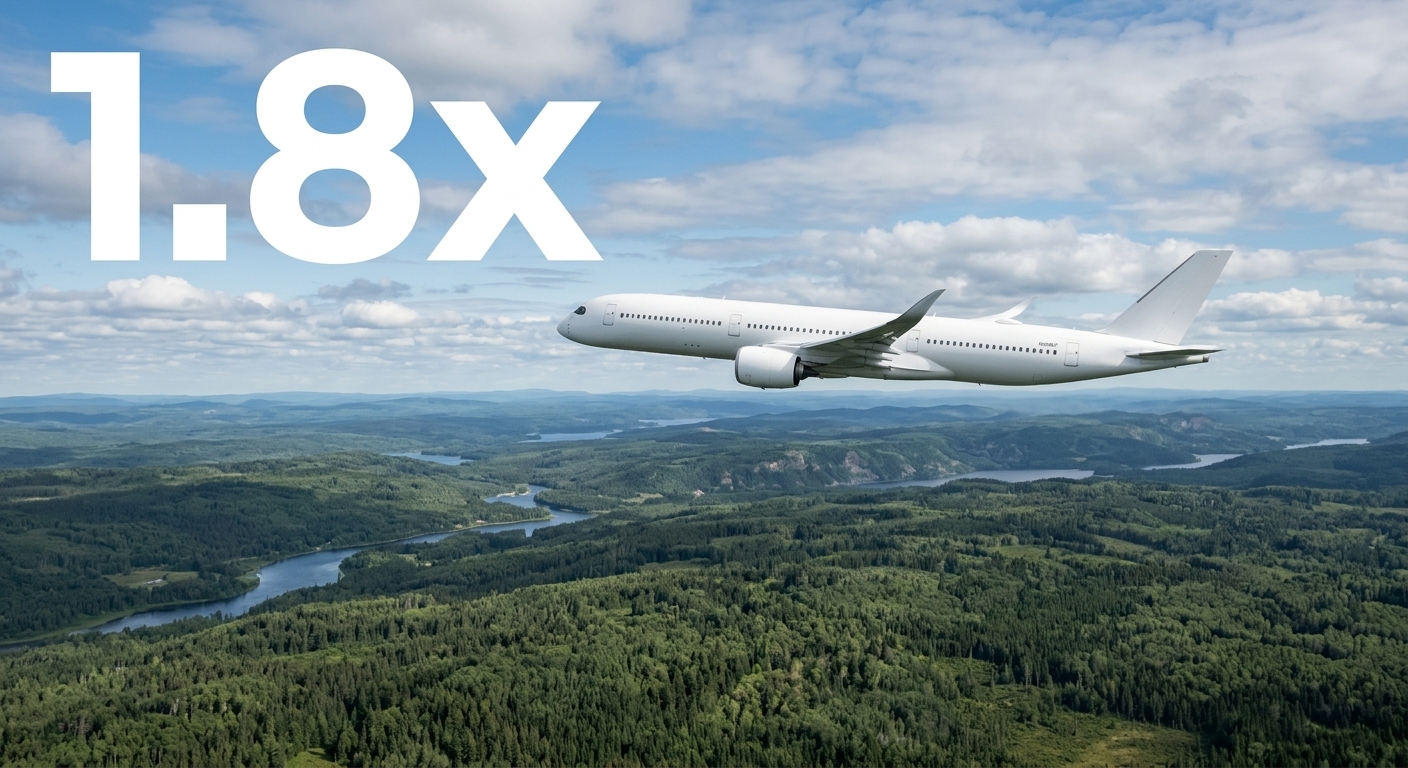
"Canada is uniquely positioned to fulfill a very large amount of the world's total jet fuel requirement," Gillard noted. "If the SUSTAERO process were to be deployed worldwide, wood waste alone would be able to fulfill double the world's total jet fuel requirement."
Gillard added that starting with an abundant, existing, and economically viable feedstock is central to SUSTAERO’s strategy. "Starting with a feedstock that has the potential to achieve that kind of displacement, economically, is at the base of our thesis, why we started SUSTAERO, and why we think Canada can play a very important role in sustainable aviation fuel going forward."
Panel Discussion and Audience Q&A
During the panel session with executives representing major refiners and marine logistics operators, Gillard addressed several key themes surrounding credit prioritization, policy frameworks, and execution risk:
Aligning Policy with National Comparative Advantages
When asked what determines which new credit pathways deserve priority, Gillard urged Canadian regulators to build on the nation's existing industrial and natural strengths.
"Here in Canada, we’re working with the resources and the industries that we have already," Gillard said. "Taking an incredibly abundant feedstock that is waste in Canada... puts Canada at a tremendous advantage. Similarly, our world leadership position in low-carbon, low-cost hydro and other renewable electricity gives us an enormous advantage over most regions in the world."
Gillard noted that SUSTAERO's first facility has had its carbon intensity score calculated at 8.8 gCO2e/MJ by BrightSpot Climate, leveraging the low-carbon footprint of hydro power.
Easing Demand Barriers and Policy Mechanisms
While domestic mandates help drive adoption, international SAF demand is projected to outstrip global supply well past 2050. Gillard highlighted that approximately two-thirds of SUSTAERO’s output from its first facility will qualify as eSAF under the EU's ReFuelEU Aviation regulation, allowing for international off-take while supplying domestic airlines.
To help Canadian air carriers adopt drop-in fuels domestically without bearing unfair bankability burdens, Gillard pointed to international policy frameworks like the UK’s Contracts for Difference (CfD) model for SAF producers approaching final investment decision (FID).
"In contracts for difference, the UK government guarantees a certain SAF price to SAF producers trying to reach FID," Gillard explained. "That is going to ensure a much higher percentage of those plants reach FID and commercial reality. The same thing could be done here in Canada, maybe specific to the Canadian airlines and Canadian producers."
Technology Neutrality and Drop-In Equivalency
Addressing the evolution of Canada's Clean Fuel Regulations (CFR), administered by Environment and Climate Change Canada (ECCC), Gillard advocated for technology neutrality rather than picking specific winning processes.
"I don't think that the ECCC should be the arbiter of what technologies are coming along," Gillard stated. "So long as we're making an identical molecule that is drop-in for any existing craft and it can be certified as such, the pathway to generate that shouldn't be arbitrated by the ECCC or through the rules of CFR."
Addressing Historical Execution Risk
When asked how SUSTAERO plans to succeed where earlier bio-refining attempts encountered obstacles, Gillard highlighted SUSTAERO's reliance on clean feedstock and commercially proven engineering blocks rather than unproven technology integration.
"The Nextchem gasification technology we use was commercialized by JFE, the Japanese steel company, 25 years ago... it is the world's only TRL-9 at scale process for processing of woody biomass," Gillard explained. "We pair that with our partnerships with Sasol and Topsoe... Sasol has been making jet fuel from syngas since 1997. This is a completely de-risked process train where every element of it has been commercial for decades. We're not taking on any technology risk at all."
Gillard noted that utilizing clean wood waste eliminates the tars, chlorine, and acid corrosion issues that disrupted previous municipal solid waste (MSW) projects. "We don't have any of the tars coming off of our process and going into the Fischer-Tropsch. Of course, we take all the lessons we can from the errors of the past to make for a brighter future."
Looking Ahead
By converting forestry residues into drop-in jet fuel, SUSTAERO aims to re-energize forest-dependent communities across Canada while establishing the country as a leader in global aviation decarbonization.
"Wood waste as a feedstock makes sense for any drop-in paraffinic fuel," Gillard concluded. "Canada has such an incredible abundance of usable wood waste each year that, combined with our low-cost and low-CI electricity, allows us to economically process that and meet the prices that the market is willing to pay."
About SUSTAERO: SUSTAERO is building the world’s first billion-litre wood waste to Sustainable Aviation Fuel capacity, driven by Fortune 100 leadership and its proprietary SOAR™ process. SUSTAERO’s SAF has extremely high security of supply due to simple, sustainable, uninterruptible supply chains. Please visit www.SUSTAERO.ca to learn more or contact PR@SUSTAERO.ca.
Share on






Share on

Recent Blogs



Connect with Sustaero
For investor inquiries, SAF supply discussions, partnerships, or stakeholder engagement, send a note and we’ll respond within one business day.

Sign up for the Frequent Flyer Newsletter
Company
Terms & Conditions